
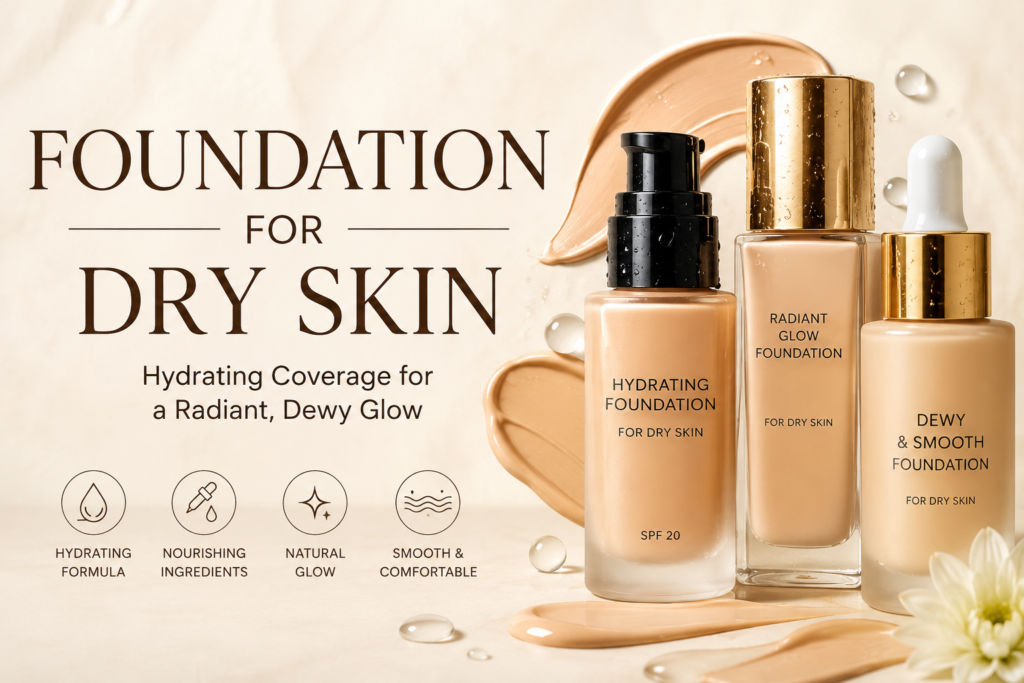
Finding the foundation for dry skin isn’t always easy. If your skin feels tight, flaky, or rough, the wrong foundation can cling to dry patches, settle into fine lines, and leave your complexion looking dull instead of radiant. The good news is that today’s hydrating foundations are designed to deliver beautiful coverage while keeping your skin moisturized throughout the day.
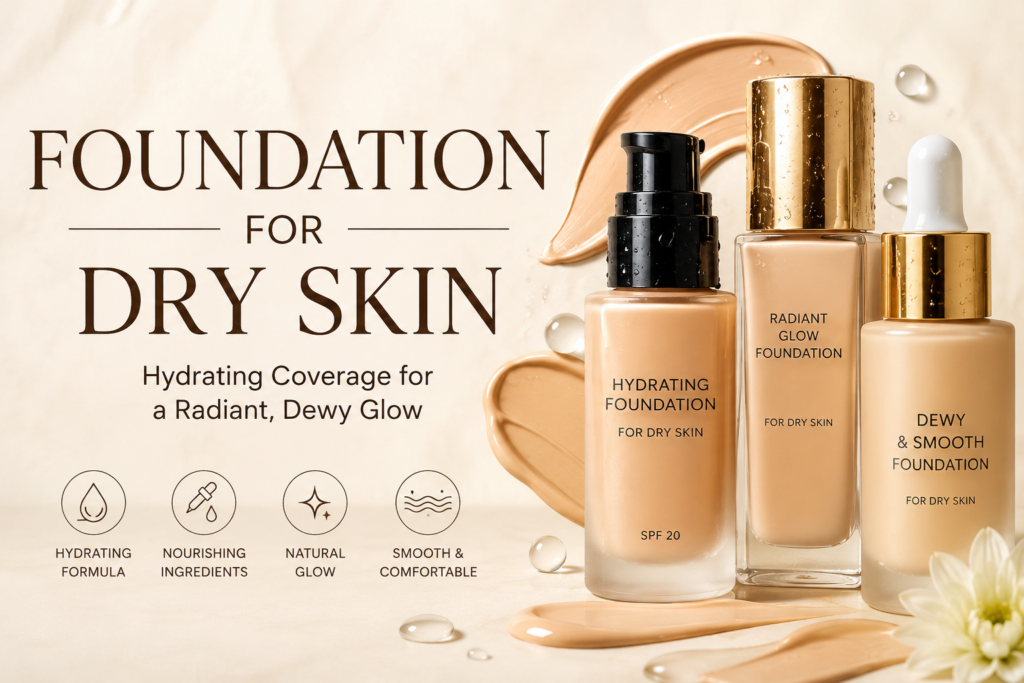
Unlike traditional matte formulas, the best foundation for dry skin contains nourishing ingredients such as hyaluronic acid, glycerin, ceramides, and squalane. These ingredients help attract and lock in moisture while creating a smooth canvas for makeup application.
Whether you’re dealing with seasonal dryness, dehydrated skin, or naturally dry skin year-round, this guide will help you choose the right foundation, understand which ingredients matter most, and discover professional tips for achieving healthy, glowing skin.
Quick Answer
If you have dry skin, choose a liquid or serum-based foundation that contains hydrating ingredients like hyaluronic acid, glycerin, ceramides, squalane, or niacinamide. Avoid heavy matte formulas, as they can emphasize flaky areas and make your skin appear dull.
Table of Contents
- What Is Foundation for Dry Skin?
- Why Dry Skin Needs a Different Foundation
- Signs You’re Using the Wrong Foundation
- Best Ingredients to Look For
- Ingredients to Avoid
- How to Prepare Dry Skin Before Makeup
- Common Mistakes to Avoid
What Is Foundation for Dry Skin?
A foundation for dry skin is a specially formulated makeup product that provides coverage while adding moisture to the skin. Unlike regular foundations that focus mainly on oil control, hydrating foundations help maintain your skin’s moisture barrier throughout the day.
These formulas usually have a lightweight, creamy, or serum-like consistency that blends effortlessly without highlighting dry patches.
The goal isn’t just to cover imperfections—it’s to make your skin look naturally healthy, plump, and luminous.
Benefits of Hydrating Foundations
- Keep skin comfortable throughout the day
- Reduce the appearance of flaky patches
- Create a natural, radiant finish
- Blend smoothly without streaks
- Improve makeup longevity
- Prevent foundation from cracking
- Make skin appear healthier and more youthful
Why Dry Skin Needs a Different Foundation
Dry skin lacks enough natural oils to keep the surface soft and flexible. As a result, regular foundations may absorb moisture from the skin, making dryness even more noticeable.
Hydrating foundations work differently.
Instead of sitting heavily on the skin, they contain moisturizing ingredients that support the skin barrier while providing buildable coverage.
This means your complexion stays fresh instead of becoming cakey after a few hours.
Signs You’re Using the Wrong Foundation
Not every foundation works well for dry skin.
Here are common signs it’s time to switch your product.
1. Your Foundation Looks Cakey
One of the biggest signs is when makeup starts separating around your nose, cheeks, or forehead.
Instead of blending naturally, it sits on top of dry patches.
2. Flakes Become More Visible
A good foundation should smooth your complexion—not make flakes more obvious.
If your makeup highlights every dry area, your formula isn’t hydrating enough.
3. Tightness After Makeup
Healthy makeup should feel lightweight.
If your face feels stretched or uncomfortable after applying foundation, your product may contain ingredients that dry out your skin.
4. Makeup Doesn’t Last
When your skin lacks moisture, foundation often breaks apart throughout the day.
Hydrated skin helps makeup stay smooth for much longer.
Best Ingredients to Look For
Reading ingredient labels can make a huge difference.
These ingredients are especially beneficial when choosing a foundation for dry skin.
Hyaluronic Acid
Hyaluronic acid is one of the best hydrating ingredients in skincare and makeup.
It attracts water to the skin, making your complexion appear smoother, plumper, and healthier.
Benefits
- Deep hydration
- Smooth finish
- Reduces rough texture
- Gives a natural glow
Glycerin
Glycerin is another powerful humectant.
It pulls moisture from the environment into your skin, preventing dehydration during the day.
Benefits
- Softens dry skin
- Prevents makeup cracking
- Improves foundation wear
- Supports skin hydration
Ceramides
Ceramides help repair the skin barrier.
A stronger barrier means your skin loses less moisture throughout the day.
Benefits
- Locks in hydration
- Repairs damaged skin barrier
- Reduces dryness
- Improves skin texture
Squalane
Squalane is a lightweight moisturizing oil that feels comfortable without being greasy.
It works well under makeup because it absorbs quickly while leaving skin silky smooth.
Benefits
- Long-lasting hydration
- Lightweight feel
- Soft, smooth finish
- Ideal for sensitive skin
Niacinamide
Niacinamide is known for improving skin texture and strengthening the moisture barrier.
It also helps reduce redness while supporting healthy skin over time.
Benefits
- Strengthens skin barrier
- Improves uneven texture
- Reduces redness
- Supports healthy-looking skin
Ingredients to Avoid
Some foundation formulas can make dry skin look even worse.
Try to avoid products containing:
- High amounts of alcohol
- Heavy matte powders
- Drying clay ingredients
- Excess fragrance if your skin is sensitive
- Long-wear formulas designed specifically for oily skin
Choosing a hydrating formula will almost always give better results if dryness is your primary concern.
How to Prepare Dry Skin Before Applying Foundation
Even the best foundation for dry skin performs better when your skin is properly prepared.
Step 1: Cleanse Gently
Use a gentle, hydrating cleanser that removes dirt without stripping natural oils.
Step 2: Apply Moisturizer
A rich moisturizer helps soften dry patches and creates a smoother surface for foundation.
Wait about five minutes before moving to the next step.
Step 3: Use a Hydrating Primer
A moisturizing primer fills fine lines while helping foundation glide on evenly.
It also improves makeup longevity.
Step 4: Apply Foundation in Thin Layers
Instead of applying a thick layer all at once, build your coverage gradually.
Using a damp makeup sponge often creates the most natural-looking finish.
Common Mistakes to Avoid
Many people accidentally make dry skin look worse with these mistakes.
- Skipping moisturizer
- Using too much powder
- Choosing matte foundations
- Applying thick layers
- Forgetting sunscreen
- Using dirty makeup brushes
- Not exfoliating regularly
Avoiding these habits can dramatically improve how your makeup looks throughout the day.
9 Best Foundation for Dry Skin in 2026
If you’re searching for the best foundation for dry skin, choosing a formula with hydrating skincare ingredients can make all the difference. The right foundation won’t just cover imperfections—it will nourish your skin while creating a smooth, radiant finish.
Below are some of the most recommended options loved by beauty editors, makeup artists, and users with dry skin.
1. Dior Forever Skin Glow Foundation
Best Overall
Why You’ll Love It
This luxurious foundation delivers medium-to-full coverage while maintaining a natural, luminous finish. Its skincare-infused formula keeps skin hydrated throughout the day without feeling heavy.
Best For
- Normal to dry skin
- Mature skin
- Everyday wear
Pros
- Long-lasting glow
- Comfortable lightweight formula
- Excellent shade range
- Doesn’t cling to dry patches
Cons
- Premium price
2. NARS Light Reflecting Foundation
Best for Dry and Sensitive Skin
This foundation combines makeup with skincare ingredients to improve skin texture while providing buildable coverage.
Key Benefits
- Hydrating
- Lightweight
- Natural finish
- Suitable for sensitive skin
3. Haus Labs Triclone Skin Tech Foundation
Best Medium-to-Full Coverage
If you prefer more coverage without sacrificing hydration, this foundation is an excellent option.
Why It Works
- Buildable coverage
- Comfortable wear
- Skin-loving ingredients
- Doesn’t feel cakey
4. Make Up For Ever Super Boost Skin Tint
Best Lightweight Option
Perfect for people who love natural makeup.
It evens out skin tone while allowing your skin to breathe.
5. Patrick Ta Hydra-Luxe Foundation
Best Dewy Finish
Designed specifically for radiant makeup lovers, this formula leaves skin looking healthy rather than shiny.
6. Kosas BB Burst
Best Everyday Foundation
Ideal if you prefer sheer-to-medium coverage with skincare benefits.
7. Chanel Les Beiges Healthy Glow Foundation
Best Luxury Foundation
A lightweight formula that creates a healthy, fresh complexion.
8. Ilia Super Serum Skin Tint SPF 40
Best Skin Tint
Perfect for minimal makeup days.
Benefits include:
- SPF protection
- Hydration
- Natural finish
- Lightweight texture
9. Victoria Beckham Beauty Foundation Drops
Best Serum Foundation
This serum-style foundation melts into the skin while providing a healthy glow.
Perfect for:
- Dry skin
- Mature skin
- Lightweight makeup lovers
Comparison Table
| Foundation | Coverage | Finish | Best For |
| Dior Forever Skin Glow | Medium-Full | Radiant | Overall Best |
| NARS Light Reflecting | Medium | Natural | Sensitive Skin |
| Haus Labs | Medium-Full | Natural | Long Wear |
| Make Up For Ever | Light-Medium | Dewy | Everyday Makeup |
| Patrick Ta | Medium | Luminous | Dry Skin |
| Kosas BB Burst | Light-Medium | Glowy | Beginners |
| Chanel Les Beiges | Light | Natural | Luxury |
| Ilia Skin Tint | Light | Dewy | SPF Protection |
| Victoria Beckham | Light-Medium | Natural | Mature Skin |
How to Choose the Right Foundation for Dry Skin
Finding the perfect foundation for dry skin depends on more than just coverage.
Consider these factors before buying.
Choose a Hydrating Formula
Look for labels like:
- Hydrating
- Dewy
- Radiant
- Skin Serum Foundation
- Moisturizing
Check the Ingredients
The best formulas contain:
- Hyaluronic Acid
- Glycerin
- Ceramides
- Squalane
- Vitamin E
- Niacinamide
Pick Your Coverage
Light Coverage
Perfect for everyday wear.
Medium Coverage
Balances natural skin with blemish coverage.
Full Coverage
Ideal for special occasions.
Match Your Skin Undertone
Choosing the correct undertone prevents foundation from looking orange, pink, or gray.
Undertones include:
- Cool
- Warm
- Neutral
- Olive
Makeup Artist Tips for Dry Skin
Professional makeup artists recommend these techniques:
Always Moisturize First
Hydrated skin creates the smoothest makeup application.
Use a Damp Sponge
A damp beauty sponge presses foundation into the skin for a natural finish.
Build Thin Layers
Instead of applying lots of product at once, slowly build your coverage.
Set Only Necessary Areas
Avoid covering your whole face with powder.
Instead, lightly powder:
- Nose
- Chin
- Forehead (if needed)
Leave your cheeks glowing.
Finish With Hydrating Setting Spray
This removes any powdery appearance while increasing makeup longevity.
Common Foundation Mistakes
Avoid these mistakes if you have dry skin.
❌ Skipping moisturizer
❌ Using matte powder foundation
❌ Applying too much product
❌ Choosing the wrong shade
❌ Forgetting primer
❌ Over-powdering your face
❌ Using old makeup brushes
Frequently Asked Questions
Which foundation is best for dry skin?
Hydrating liquid foundations containing hyaluronic acid, glycerin, ceramides, or squalane are generally the best choice because they provide coverage without emphasizing dry patches.
Is matte foundation bad for dry skin?
Not always, but many matte formulas can make dry skin look dull or flaky. A radiant or natural-finish foundation is often a better option.
Should I moisturize before foundation?
Yes. Applying moisturizer before foundation helps create a smoother base, improves makeup application, and reduces the appearance of dry patches.
Can dry skin wear full-coverage foundation?
Absolutely. Choose a hydrating full-coverage formula and apply it in thin layers to maintain a natural finish.
How can I stop foundation from looking cakey?
Prepare your skin with moisturizer and primer, use a hydrating formula, apply thin layers, and avoid using too much powder.
Final Thoughts
Choosing the right foundation for dry skin is about more than achieving flawless coverage. The best formulas combine makeup with skin-loving ingredients to keep your complexion hydrated, comfortable, and radiant all day long.
Before buying a foundation, pay attention to its finish, ingredients, and coverage level. Look for nourishing ingredients such as hyaluronic acid, glycerin, ceramides, squalane, and niacinamide, which help support your skin barrier while creating a smooth, healthy-looking complexion.
With the right skincare routine, proper application techniques, and a foundation designed for dry skin, you can enjoy makeup that enhances your natural glow instead of highlighting dryness.