
If you have blemish prone skin, you already know how frustrating it can be to wake up with a new breakout, dark spot, or red bump just when your skin was starting to look clear. Whether you’re dealing with occasional pimples or frequent breakouts, blemishes can affect your confidence and make finding the right skincare routine feel overwhelming.
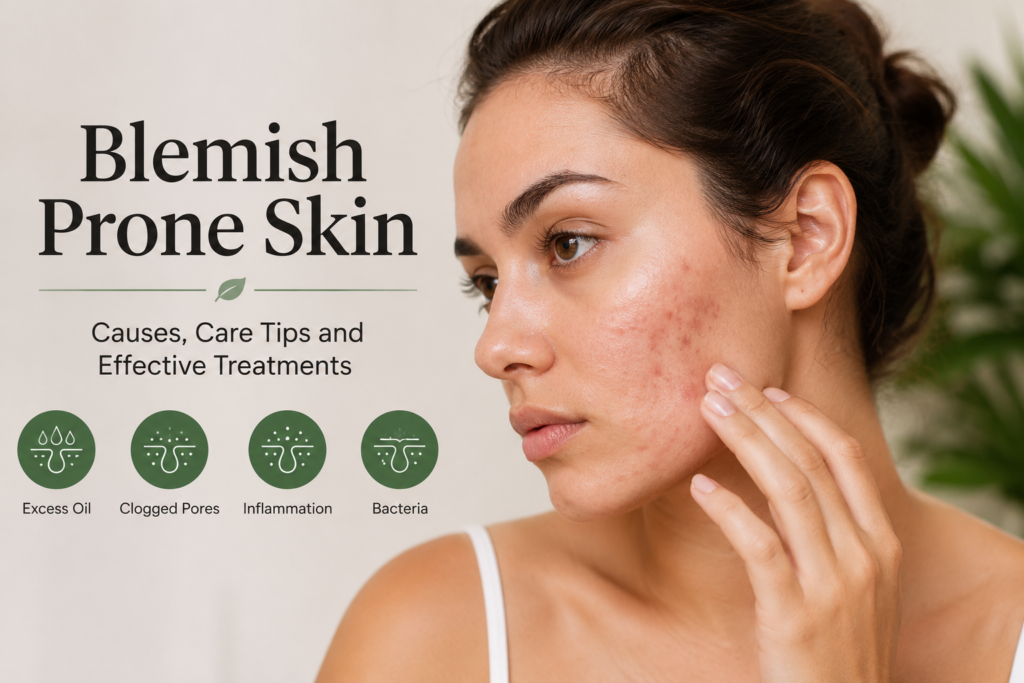
The good news is that blemish prone skin can be managed with the right knowledge, consistent skincare, and healthy lifestyle habits. Understanding what causes blemishes is the first step toward achieving healthier, clearer-looking skin. While there is no overnight solution, using the right products and avoiding common skincare mistakes can significantly reduce breakouts and improve your complexion over time.
In this complete guide, you’ll learn what blemish prone skin is, what causes it, the different types of blemishes, and how to identify the early signs before they become more severe.
What Is Blemish Prone Skin?
Blemish prone skin refers to skin that develops imperfections more easily than other skin types. These imperfections may include pimples, blackheads, whiteheads, dark spots, post-acne marks, redness, or uneven skin texture.
Many people assume that blemishes only mean acne, but that’s not entirely true. A blemish is any visible mark or discoloration on the skin. Some blemishes are temporary and disappear within a few days, while others, such as acne scars or pigmentation, may last for months without proper treatment.
People with oily skin often experience blemishes more frequently because excess oil mixes with dead skin cells and blocks pores. However, combination, normal, and even dry skin can also become blemish-prone due to hormonal changes, environmental factors, or improper skincare.
What Causes Blemish Prone Skin?
There isn’t one single reason why blemishes appear. In most cases, several internal and external factors work together to trigger breakouts.
Excess Oil Production
One of the most common causes of blemish prone skin is excess sebum production. Sebum is your skin’s natural oil that helps keep it moisturized. However, when your sebaceous glands produce too much oil, it combines with dead skin cells and dirt, clogging pores.
Blocked pores create the perfect environment for acne-causing bacteria, leading to blackheads, whiteheads, and inflamed pimples.
Hormonal Changes
Hormones play a significant role in skin health. During puberty, pregnancy, menstruation, or menopause, hormonal fluctuations can stimulate oil production, increasing the likelihood of blemishes.
Many adults, especially women, continue to experience hormonal breakouts well beyond their teenage years.
Clogged Pores
Dead skin cells naturally shed every day. When these cells fail to leave the skin properly, they mix with oil and debris, blocking hair follicles.
Clogged pores are often the starting point for many types of blemishes.
Bacteria
The skin naturally contains bacteria. When excess oil accumulates inside clogged pores, bacteria multiply rapidly, triggering inflammation and causing painful pimples and pustules.
Genetics
Sometimes blemish prone skin runs in families. If one or both of your parents struggled with acne or oily skin, your chances of developing similar concerns are higher.
Although genetics cannot be changed, a proper skincare routine can help minimize breakouts.
Stress
Stress doesn’t directly cause acne, but it can make existing blemishes worse.
When you’re stressed, your body releases cortisol, a hormone that increases oil production. As a result, breakouts often become more frequent during stressful periods.
Diet
While diet isn’t the sole cause of acne, research suggests that foods with a high glycemic index, sugary snacks, processed foods, and excessive dairy consumption may worsen breakouts in some people.
Eating a balanced diet rich in vegetables, fruits, lean proteins, and healthy fats may help support healthier skin.
Poor Skincare Habits
Using harsh cleansers, skipping sunscreen, sleeping with makeup on, or choosing pore-clogging skincare products can all contribute to blemishes.
Consistency is far more important than using dozens of expensive products.
Signs and Symptoms of Blemish Prone Skin
Recognizing the early signs of blemish prone skin can help you prevent small imperfections from becoming severe breakouts.
Common symptoms include:
- Frequent pimples
- Blackheads
- Whiteheads
- Oily or shiny skin
- Enlarged pores
- Red bumps
- Dark spots after acne heals
- Uneven skin texture
- Mild inflammation
- Occasional painful breakouts
Some people experience only one or two of these symptoms, while others deal with several at the same time.
Different Types of Blemishes
Understanding the different types of blemishes makes it easier to choose the right treatment.
Blackheads
Blackheads are open clogged pores filled with oil and dead skin cells. When exposed to air, the material inside oxidizes, turning black.
Unlike dirt, blackheads cannot simply be washed away.
Whiteheads
Whiteheads form when clogged pores remain closed beneath the skin’s surface. They appear as small white or flesh-colored bumps and are commonly found on the forehead, chin, and cheeks.
Papules
Papules are small, raised, red bumps caused by inflammation inside clogged pores.
Unlike pimples, papules do not contain pus but can be tender when touched.
Pustules
Pustules are inflamed pimples filled with white or yellow pus.
They are one of the most recognizable types of acne and often develop after bacteria infect blocked pores.
Nodules
Nodules are large, painful lumps that develop deep beneath the skin.
Unlike ordinary pimples, they cannot be treated by squeezing and often require professional treatment.
Cysts
Cystic blemishes are severe, pus-filled lumps that form deep under the skin.
They are often painful and may leave permanent scars if not treated properly.
Dark Spots
Dark spots, also known as post-inflammatory hyperpigmentation (PIH), often remain after acne heals.
Although they are not active acne, they are still considered a common type of blemish.
Acne Scars
Acne scars develop when severe inflammation damages deeper layers of the skin.
Unlike dark spots, scars change the skin’s texture and usually require specialized treatments to improve their appearance.
Morning Skincare Routine for Blemish Prone Skin
A morning skincare routine helps remove excess oil that builds up overnight while protecting your skin from pollution, UV rays, and other environmental stressors.
Step 1: Cleanse Your Face Gently
Start your day with a gentle cleanser designed for blemish prone skin. Cleansing removes oil, sweat, and bacteria without stripping your skin’s natural moisture.
Look for cleansers containing ingredients like:
- Salicylic acid
- Zinc PCA
- Niacinamide
- Tea tree extract
- Ceramides
Avoid harsh soaps or cleansers containing high amounts of alcohol, as they can damage the skin barrier and increase oil production.
Step 2: Apply a Lightweight Serum
Serums deliver concentrated ingredients that target specific skin concerns.
If your primary concern is acne marks and uneven skin tone, choose a serum containing niacinamide.
Benefits of niacinamide include:
- Reduces redness
- Controls excess oil
- Minimizes enlarged pores
- Fades post-acne marks
- Strengthens the skin barrier
Vitamin C can also be beneficial if your skin is no longer actively breaking out and your main concern is pigmentation.
Step 3: Moisturize Every Morning
Many people with blemish prone skin skip moisturizer because they think it will make their skin oilier.
This is a common mistake.
When your skin becomes dehydrated, it often produces even more oil to compensate, increasing the chances of clogged pores.
Choose a moisturizer that is:
- Oil-free
- Lightweight
- Non-comedogenic
- Fragrance-free
- Fast absorbing
Gel-based moisturizers are often an excellent choice for oily and combination skin.
Step 4: Never Skip Sunscreen
Daily sunscreen is one of the most important steps in preventing new blemishes and reducing dark spots.
UV exposure can worsen acne marks, increase pigmentation, and slow the skin’s healing process.
Choose a sunscreen that offers:
- SPF 30 or higher
- Broad-spectrum protection
- Non-comedogenic formula
- Lightweight texture
Apply sunscreen every morning and reapply every two hours if you’re outdoors for extended periods.
Night Skincare Routine for Blemish Prone Skin
Your skin repairs itself while you sleep, making nighttime the perfect opportunity to use active ingredients that fight blemishes.
Step 1: Remove Makeup Completely
Sleeping with makeup blocks pores and traps bacteria, increasing the risk of breakouts.
Use a cleansing balm, micellar water, or cleansing oil before washing your face with a gentle cleanser.
Double cleansing is especially helpful if you wear sunscreen or makeup daily.
Step 2: Use Targeted Treatment Products
Nighttime is the best time to apply treatments that unclog pores and improve skin texture.
Depending on your skin’s needs, consider ingredients such as:
Salicylic Acid
Salicylic acid is one of the most effective ingredients for blemish prone skin because it penetrates deep into pores and removes excess oil.
Benefits include:
- Unclogs pores
- Reduces blackheads
- Prevents whiteheads
- Controls oil
- Reduces inflammation
Benzoyl Peroxide
Benzoyl peroxide helps eliminate acne-causing bacteria and is particularly useful for inflamed pimples.
It can:
- Reduce bacteria
- Calm redness
- Dry active pimples
- Prevent future breakouts
Because it may cause dryness, start with a lower concentration and use it only a few times each week.
Retinol
Retinol increases cell turnover, helping prevent clogged pores while improving acne scars and uneven texture.
Regular use may:
- Reduce breakouts
- Smooth skin texture
- Fade acne marks
- Minimize fine lines
- Improve overall skin appearance
Introduce retinol gradually to avoid irritation.
Step 3: Lock in Moisture
Finish your nighttime routine with a lightweight moisturizer to keep your skin hydrated while active ingredients work overnight.
Hydrated skin heals faster and experiences less irritation.
Best Ingredients for Blemish Prone Skin
Choosing the right ingredients is often more important than buying expensive products.
Some of the most effective ingredients include:
Salicylic Acid
Perfect for oily skin and clogged pores.
Niacinamide
Helps reduce redness, excess oil, and dark spots.
Azelaic Acid
Works well for acne, redness, and post-inflammatory hyperpigmentation.
Retinol
Improves acne, texture, and acne scars.
Benzoyl Peroxide
Kills acne-causing bacteria and treats inflamed pimples.
Hyaluronic Acid
Keeps the skin hydrated without making it greasy.
Ceramides
Strengthen the skin barrier and reduce irritation caused by acne treatments.
Professional Treatments for Blemish Prone Skin
If over-the-counter products don’t improve your skin after several weeks of consistent use, professional treatments may be necessary.
Dermatologists may recommend:
Chemical Peels
Chemical peels remove dead skin cells and improve:
- Acne scars
- Dark spots
- Uneven texture
- Mild breakouts
Microneedling
Microneedling stimulates collagen production and helps improve:
- Acne scars
- Large pores
- Rough skin texture
- Fine lines
Laser Treatments
Laser therapy targets pigmentation, acne scars, and stubborn blemishes that don’t respond to skincare alone.
Several sessions may be needed for noticeable results.
Prescription Medications
For severe or cystic acne, a dermatologist may prescribe:
- Topical retinoids
- Prescription-strength benzoyl peroxide
- Oral antibiotics
- Hormonal treatments
- Isotretinoin (for severe cases)
These treatments should only be used under professional medical supervision.
Lifestyle Habits That Help Reduce Blemishes
Healthy skin starts with healthy daily habits.
Simple lifestyle changes can support your skincare routine and reduce future breakouts.
Eat a Balanced Diet
Include foods rich in:
- Fresh vegetables
- Fruits
- Whole grains
- Lean protein
- Healthy fats
- Omega-3 fatty acids
Limiting sugary snacks and highly processed foods may help some people experience fewer breakouts.
Stay Hydrated
Drinking enough water supports your skin’s natural barrier and overall health.
Aim for consistent hydration throughout the day.
Get Enough Sleep
Your skin repairs itself during sleep.
Adults should aim for around 7–9 hours of quality sleep each night to support healthy skin regeneration.
Manage Stress
Stress can increase oil production and worsen existing blemishes.
Helpful stress-management techniques include:
- Regular exercise
- Deep breathing
- Meditation
- Journaling
- Spending time outdoors
Keep Your Pillowcases and Phone Clean
Bacteria and oil build up on pillowcases, towels, makeup brushes, and phone screens.
Cleaning these regularly can help reduce the transfer of bacteria to your face.
Avoid Touching Your Face
Touching your face throughout the day spreads dirt, oil, and bacteria, increasing the risk of clogged pores and inflammation.
Making this one small habit change can have a noticeable impact on blemish prone skin over time.