
Oily skin can feel like a daily challenge. Choosing the right moisturiser for oily skin is essential to control excess shine, keep pores from clogging, and makeup that slips off within hours often make people believe that skipping moisturiser is the best solution. However, this is one of the biggest skincare myths. The truth is that a moisturiser for oily skin is an essential step in every skincare routine. When your skin lacks hydration, it may produce even more oil to compensate, making your face appear greasier than before.
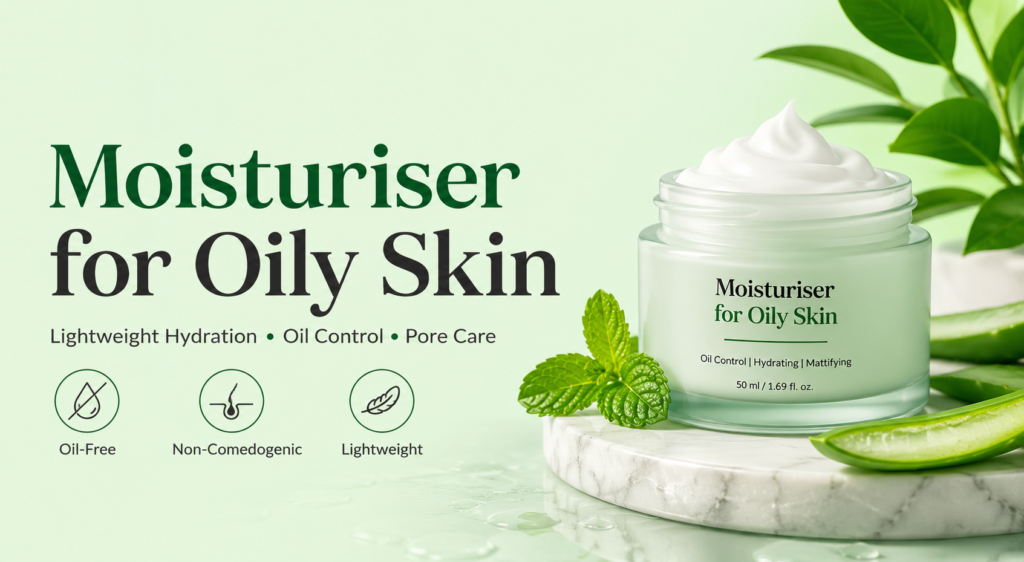
The right moisturiser doesn’t add unnecessary oil—it helps balance your skin, protects the skin barrier, and keeps your complexion healthy without clogging pores. Modern moisturisers designed for oily skin are lightweight, non-greasy, and fast-absorbing. They provide hydration while helping control excess sebum throughout the day.
Whether you struggle with acne-prone skin, combination skin, or constant shine, this guide will explain everything you need to know about choosing the best moisturiser for oily skin, the ingredients that work, common mistakes to avoid, and how to build an effective skincare routine.
Why Oily Skin Still Needs Moisturiser
Many people think oily skin is already hydrated because it produces a lot of oil. In reality, oil and hydration are completely different. Sebum is natural oil, while hydration refers to the water content inside your skin.
When your skin becomes dehydrated, it tries to protect itself by producing even more oil. This extra oil can mix with dirt, dead skin cells, and bacteria, leading to clogged pores and breakouts.
Using a lightweight moisturiser helps:
- Maintain healthy hydration
- Support the skin barrier
- Reduce excess oil production
- Improve skin texture
- Minimize irritation caused by acne treatments
- Keep skin soft and comfortable
- Help makeup apply more smoothly
A properly hydrated face often appears less oily than dehydrated skin.
Understanding Oily Skin
Before choosing a moisturiser, it’s important to understand why oily skin develops.
Several factors can increase oil production, including:
Genetics
If your parents have oily skin, there’s a good chance you inherited larger or more active oil glands.
Hormonal Changes
Hormones can increase sebum production, especially during puberty, pregnancy, or times of stress.
Hot and Humid Weather
Warm temperatures stimulate oil glands, making skin appear shinier.
Using Harsh Cleansers
Over-cleansing strips natural moisture from the skin, forcing it to produce even more oil.
Skipping Moisturiser
Ironically, avoiding moisturiser often leads to increased oil production.
Benefits of Using a Moisturiser for Oily Skin
Many people notice improvements within a few weeks of using the right moisturiser consistently.
1. Balances Oil Production
Hydrated skin doesn’t feel the need to produce excessive oil, resulting in a more balanced complexion.
2. Strengthens the Skin Barrier
Your skin barrier protects against pollution, bacteria, and moisture loss. A good moisturiser helps keep this protective layer healthy.
3. Prevents Dehydration
Air conditioning, sun exposure, and acne medications can leave oily skin dehydrated. Moisturiser replaces lost hydration without making skin greasy.
4. Reduces Irritation
Ingredients like niacinamide and ceramides soothe redness and support skin recovery.
5. Creates a Smooth Makeup Base
Lightweight moisturisers help foundation blend evenly while reducing patchiness and cakiness.
How to Choose the Best Moisturiser for Oily Skin
Not every moisturiser works well for oily skin. Thick creams designed for dry skin may clog pores and leave a heavy finish.
Instead, look for these features.
Oil-Free Formula
An oil-free formula hydrates the skin without adding unnecessary oils that may contribute to breakouts.
Non-Comedogenic
Products labeled non-comedogenic are designed not to clog pores, making them ideal for acne-prone skin.
Lightweight Texture
Gel, gel-cream, or water-based moisturisers absorb quickly and feel fresh instead of sticky.
Fast Absorption
Choose products that disappear into the skin within a few minutes rather than sitting on the surface.
Fragrance-Free Options
If your skin is sensitive, fragrance-free moisturisers reduce the risk of irritation.
Ingredients That Work Best
The ingredient list often tells you more than the marketing claims.
Hyaluronic Acid
Hyaluronic acid attracts water to the skin, delivering deep hydration without adding oil.
Benefits include:
- Lightweight hydration
- Plumper-looking skin
- Improved elasticity
- No greasy residue
Niacinamide
Niacinamide has become one of the most recommended skincare ingredients for oily skin.
It helps:
- Control excess oil
- Reduce redness
- Improve skin texture
- Minimize enlarged pores
- Support the skin barrier
Glycerin
Glycerin is a gentle humectant that draws moisture into the skin while remaining lightweight.
Ceramides
Ceramides repair and strengthen the skin barrier, especially if you’re using acne treatments containing salicylic acid or benzoyl peroxide.
Green Tea Extract
Green tea contains antioxidants that calm irritation while helping reduce excess oil production.
Aloe Vera
Aloe vera provides soothing hydration without making skin feel heavy.
It is particularly helpful after sun exposure or irritation caused by acne treatments.
Ingredients to Avoid
Some ingredients may feel too rich for oily skin.
These include:
- Heavy mineral oil
- Petrolatum (in very rich creams)
- Cocoa butter
- Coconut oil (for acne-prone skin)
- Thick wax-based formulas
Not everyone’s skin reacts the same way, but people with oily or acne-prone skin often find lightweight formulas more comfortable.
Gel vs Cream Moisturisers
One of the most common questions is whether gel or cream moisturisers are better.
Gel Moisturisers
Best for:
- Oily skin
- Acne-prone skin
- Humid climates
Advantages:
- Lightweight
- Cooling effect
- Quick absorption
- Shine-free finish
Cream Moisturisers
Best for:
- Dry skin
- Winter weather
- Damaged skin barrier
They provide richer hydration but may feel heavy on oily skin.
Morning skincare routine
Morning skincare routine Night skincare routine Common moisturiser mistakes Best moisturiser recommendations DIY myths Seasonal skincare tips Frequently Asked Questions (FAQs) Conclusion SEO Meta Title Meta Description URL Slug Image ALT Text suggestions
Morning Skincare Routine for Oily Skin
A consistent morning routine helps control excess oil while keeping your skin hydrated and protected throughout the day.
Step 1: Cleanse Your Face
Start with a gentle gel or foaming cleanser that removes overnight oil without stripping your skin. Avoid harsh cleansers, as they can trigger more oil production.
Step 2: Apply a Lightweight Serum
If you use a serum, choose one with ingredients like niacinamide or hyaluronic acid. These help hydrate the skin and support oil control.
Step 3: Apply a Moisturiser for Oily Skin
Choose a lightweight, oil-free, non-comedogenic moisturiser. Apply a small amount evenly across your face and neck. Your skin should feel hydrated, not greasy.
Step 4: Finish with Sunscreen
Never skip sunscreen. A broad-spectrum SPF 30 or higher protects your skin from UV damage and premature aging. Lightweight gel sunscreens work well for oily skin.
Night Skincare Routine for Oily Skin
Your nighttime routine focuses on repairing and restoring your skin.
Remove Makeup and Sunscreen
If you wear makeup or sunscreen, remove it thoroughly before cleansing.
Cleanse
Wash your face using a gentle cleanser to remove dirt, oil, and impurities.
Apply Treatment Products
If you use products containing salicylic acid, retinol, or benzoyl peroxide, apply them according to the product instructions.
Moisturise
Finish with your moisturiser for oily skin to lock in hydration and support your skin barrier overnight.
Common Moisturiser Mistakes
Even the best moisturiser won’t perform well if it’s used incorrectly.
Skipping Moisturiser
Skipping moisturiser often causes dehydrated skin, which may increase oil production.
Using Heavy Creams
Rich creams made for dry skin can leave oily skin feeling greasy and may contribute to clogged pores.
Applying Too Much Product
Using more product doesn’t improve hydration. A pea-sized amount is usually enough.
Ignoring Ingredients
Always check for labels such as oil-free, non-comedogenic, and lightweight instead of choosing products based only on packaging.
Forgetting Sunscreen
A moisturiser hydrates your skin, but it doesn’t replace sunscreen unless it specifically includes SPF.
Choosing the Right Moisturiser
Instead of choosing a product based on popularity alone, look for one that matches your skin’s needs.
A good moisturiser for oily skin should ideally have:
- Lightweight gel or gel-cream texture
- Oil-free formula
- Non-comedogenic label
- Fast absorption
- Ingredients such as hyaluronic acid, niacinamide, glycerin, or ceramides
If you have acne-prone skin, patch-test new products before using them regularly.
DIY Moisturiser Myths
Many DIY skincare trends become popular online, but not all are suitable for oily skin.
Myth 1: Coconut Oil Is the Best Moisturiser
While coconut oil works for some people, it can feel too heavy and may clog pores in acne-prone skin.
Myth 2: Lemon Juice Controls Oil
Applying lemon juice directly to your face can cause irritation and increase sensitivity.
Myth 3: Aloe Vera Alone Is Enough
Pure aloe vera gel feels soothing, but it doesn’t always provide complete moisturising support. A properly formulated moisturiser is usually a better choice.
Myth 4: Oily Skin Doesn’t Need Hydration
This remains one of the biggest skincare myths. Every skin type needs hydration.
Seasonal Skincare Tips
Summer
- Choose lightweight gel moisturisers.
- Cleanse gently twice a day.
- Wear sunscreen every day.
- Avoid over-washing your face.
Winter
Even oily skin can become dehydrated during colder months.
- Use a slightly richer gel-cream if needed.
- Avoid very hot water when washing your face.
- Continue moisturising every morning and night.
Humid Weather
- Stick to oil-free formulas.
- Use blotting papers if needed.
- Avoid layering too many skincare products.
Frequently Asked Questions (FAQs)
Can oily skin skip moisturiser?
No. Skipping moisturiser can lead to dehydration, which may trigger your skin to produce even more oil.
How often should I apply moisturiser?
Apply it twice daily—once in the morning and once before bed.
Can moisturiser cause acne?
A heavy or pore-clogging formula can contribute to breakouts. Choose a lightweight, non-comedogenic moisturiser.
Is gel moisturiser better than cream?
For most people with oily skin, gel moisturisers feel lighter and absorb more quickly.
Can I use moisturiser with sunscreen?
Yes. You can use a separate moisturiser and sunscreen or choose a moisturiser that includes broad-spectrum SPF for daytime use.
How long does it take to see results?
Most people notice improved hydration and comfort within a few days, while better oil balance may take several weeks of consistent use.
Conclusion
Using a moisturiser for oily skin is one of the simplest ways to improve your skincare routine. Despite the common misconception that oily skin doesn’t need hydration, the right moisturiser helps maintain your skin barrier, balance oil production, and keep your complexion healthy.
Choose lightweight, oil-free, and non-comedogenic formulas with ingredients like hyaluronic acid, niacinamide, glycerin, and ceramides. Pair your moisturiser with a gentle cleanser and daily sunscreen for the best results.
Consistency is key. With the right routine and products suited to your skin type, you can enjoy hydrated, comfortable skin without excess shine.